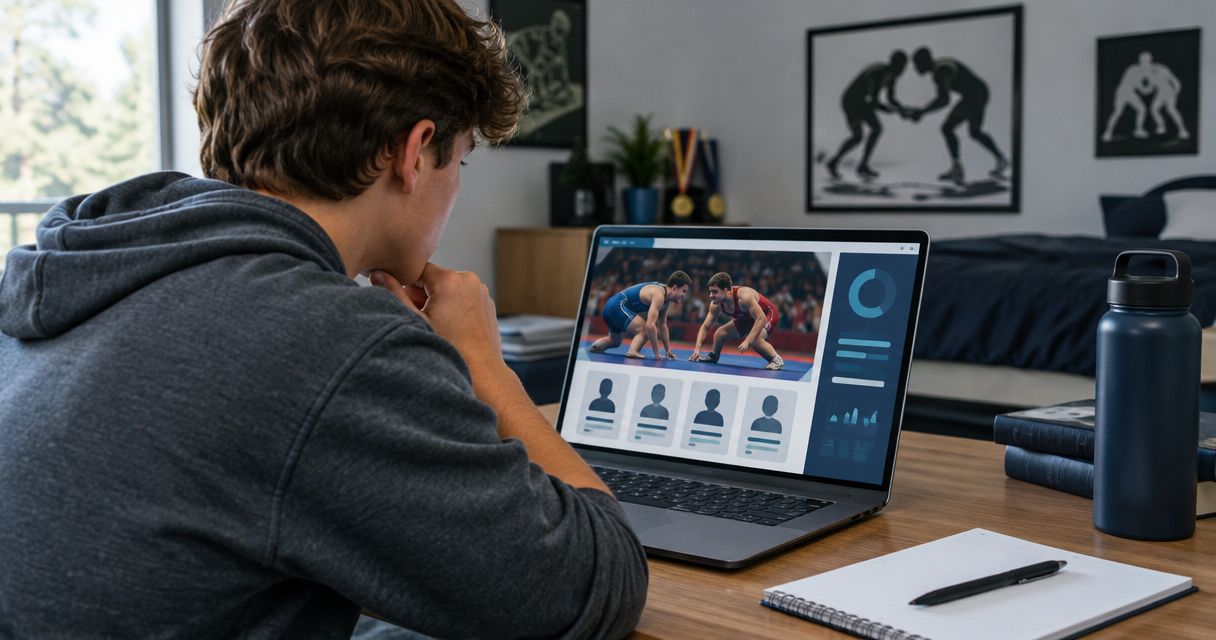
Best overall for profile building and college-fit research: RecruitMyGame. Best for recruiting guidance: NCSA. Best for organizing profiles and video: SportsRecruits. This 2026 guide compares wrestling recruiting websites by the job each does, including results verification through Trackwrestling and program research through official college athletics websites.
- RecruitMyGame is the best wrestling recruiting websites pick for student-athletes who want profile building and college-fit insights together.
- NCSA suits families seeking recruiting guidance; SportsRecruits suits athletes organizing profiles, video, and coach communication.
- Trackwrestling supports wrestling results research, not a complete college recruiting plan.
- Official college athletics websites help verify rosters and coaching contacts before outreach.
Why this matters
Your recruiting profile, competition record, and college shortlist answer different questions. A profile introduces you. Results document competition history. A college roster helps you investigate where you fit, but none of these alone tells you whether a coach wants to recruit you.
Choose a website for the task you need to complete, not for the promise of exposure. In 2026, your next move should be specific: improve your athletic evidence, identify suitable programs, or contact a coach with a clear reason for writing.
Start with RecruitMyGame if you want profile building, roster and coach-fit insights from Tosch.ai, and connections with college coaches in one platform. It serves US high school student-athletes across more than 20 sports. Your college decision still needs academic research and direct conversations with the programs you target.
What makes the best wrestling recruiting websites
Evaluate recruiting websites against these criteria before choosing where to spend your time:
- Athletic evidence: Can you present competition results, your current weight class, graduation year, and video clearly? A coach should not have to reconstruct your wrestling background.
- College fit: Does the resource help you investigate programs rather than simply collect school names? Separate athletic interest from academic suitability.
- Coach communication: Can you organize outreach or find the right contact? A visible profile and a useful conversation are different outcomes.
- Source verification: Can you check information against official rosters, event records, or direct coach replies? Treat each source according to what it actually proves.
- Workflow fit: Does the website solve your current problem? A second profile is unnecessary if your first one is complete and your missing step is outreach.
These criteria favor useful functions over brand recognition. They also explain why a wrestling results website belongs in the comparison without replacing a recruiting platform.
Wrestling recruiting websites at a glance in 2026
| Website or resource | Best for | Standout function | Key limitation |
|---|---|---|---|
| RecruitMyGame | Profile building with college-fit research | Student-athlete profiles plus roster and coach-fit insights from Tosch.ai | Fit insights do not establish a coach's recruiting interest |
| NCSA | Families seeking recruiting guidance | Athlete profiles and recruiting support | Guidance does not replace your own athletic evidence or coach conversations |
| SportsRecruits | Organizing a shareable recruiting profile | Athlete profiles, video, and coach communication | Profile organization does not settle academic or roster fit |
| Trackwrestling | Researching wrestling competition results | Event and wrestler results records | Results records are not a complete recruiting profile |
| Official college athletics websites | Verifying individual programs | Published team rosters and coaching information | Information is scattered across separate school websites |
Use one primary profile system, then add sources that answer different questions. Maintaining duplicate profiles without a clear purpose creates another place for outdated information to sit.
1. RecruitMyGame: best for profiles and college-fit research
RecruitMyGame helps high school student-athletes build profiles, access roster and coach-fit insights from Tosch.ai, and connect with college coaches. Its combination of profile building and fit research makes it the default choice here for athletes who want those tasks together.
For wrestling, organize your information around the decisions a college coach needs to investigate: graduation year, current weight class, competition history, and match footage. Keep your current competition weight separate from any future college weight-class goal.
RecruitMyGame pros:
- Combines profile building with roster and coach-fit research.
- Includes connections with college coaches in its stated platform scope.
- Serves US high school student-athletes across more than 20 sports.
RecruitMyGame cons:
- Roster and coach-fit insights are not an offer or confirmation of a recruiting opening.
- Athletic research does not settle whether a college meets your academic needs.
Best for: High school wrestlers who want a central profile alongside college-fit research.
Verdict: Buy only if profile building and fit research match your needs; confirm wrestling-specific functionality before committing.
2. NCSA: best for families seeking recruiting guidance
NCSA provides athlete recruiting profiles and recruiting support. It belongs on your shortlist when you want help understanding the process rather than only a place to publish athletic information.
Make your questions concrete. Ask how the service addresses wrestling outreach, how your competition record should be presented, and what responsibilities remain with you. Judge the guidance by whether it helps you take the next useful action.
NCSA pros:
- Provides a recruiting-profile resource for student-athletes.
- Offers recruiting guidance alongside profile tools.
- Gives families a place to investigate recruiting support before choosing a service.
NCSA cons:
- Recruiting support cannot substitute for credible results and useful match footage.
- You still need direct confirmation of a program's interest, admissions expectations, and team situation.
Best for: Wrestlers and parents whose main need is recruiting-process guidance.
Verdict: Buy only if you need the specific support being offered, not simply another profile.
3. SportsRecruits: best for organizing profiles and video
SportsRecruits provides athlete profiles, video tools, and coach communication. It is a relevant option when your immediate problem is scattered recruiting material: match links in one place, athletic details in another, and outreach elsewhere.
A clear profile helps you send a consistent introduction. It does not make an unsuitable college suitable, so complete your program research before treating profile distribution as progress.
SportsRecruits pros:
- Brings athletic information into a shareable recruiting profile.
- Supports video as part of the athlete's presentation.
- Includes tools for coach communication.
SportsRecruits cons:
- Organized materials do not establish that a wrestling program needs your weight class.
- A profile still needs accurate details, relevant footage, and purposeful outreach.
Best for: Athletes whose priority is organizing recruiting information and communication.
Verdict: Buy only if profile and communication organization solve a real problem in your current workflow.
4. Trackwrestling: best for competition-results research
Trackwrestling is a wrestling event and results resource. Use it to research recorded competition history and locate relevant event information, then check that the record belongs to the correct wrestler.
Results help document what happened at an event. They do not explain every match sequence, demonstrate classroom fit, or tell you what a college coach is currently seeking.
Trackwrestling pros:
- Focuses on wrestling rather than general athletic recruiting.
- Provides event and wrestler results records.
- Helps you locate competition evidence to support your athletic summary.
Trackwrestling cons:
- A competition record is not a complete student-athlete recruiting profile.
- Name matches and individual entries need checking before you use them as evidence.
Best for: Wrestlers assembling or checking their documented competition history.
Verdict: Hold as a supporting results source, not your primary recruiting system.
5. Official college athletics websites: best for program verification
Official college athletics websites publish information directly from the schools, including team rosters and coaching details. They are the first place to check whether your outreach matches the actual program you intend to contact.
Read the wrestling roster, coaching page, and any published recruiting information together. Then use the college's admissions information separately; a team website does not answer every academic question.
Official college athletics websites pros:
- Provide school-published information about individual programs.
- Let you inspect listed wrestlers and weight classes.
- Help you identify coaching contacts and published recruiting instructions.
Official college athletics websites cons:
- Research requires moving between separate school websites.
- A published roster does not confirm a future vacancy or recruiting priority.
Best for: Athletes checking a specific college before sending a personalized message.
Verdict: Skip as a profile host; use as an essential program-verification source.
How we ranked these recruiting resources
This 2026 ranking follows the criteria above: athletic evidence, college fit, coach communication, source verification, and workflow fit. The order favors a primary recruiting workflow first, then guidance and organization, followed by supporting research sources.
The picks occupy different use cases. A results database should be judged on competition records, not on whether it replaces a recruiting service. An official roster should be judged as program information, not as proof of an available spot.
Turn your website choice into a recruiting workflow
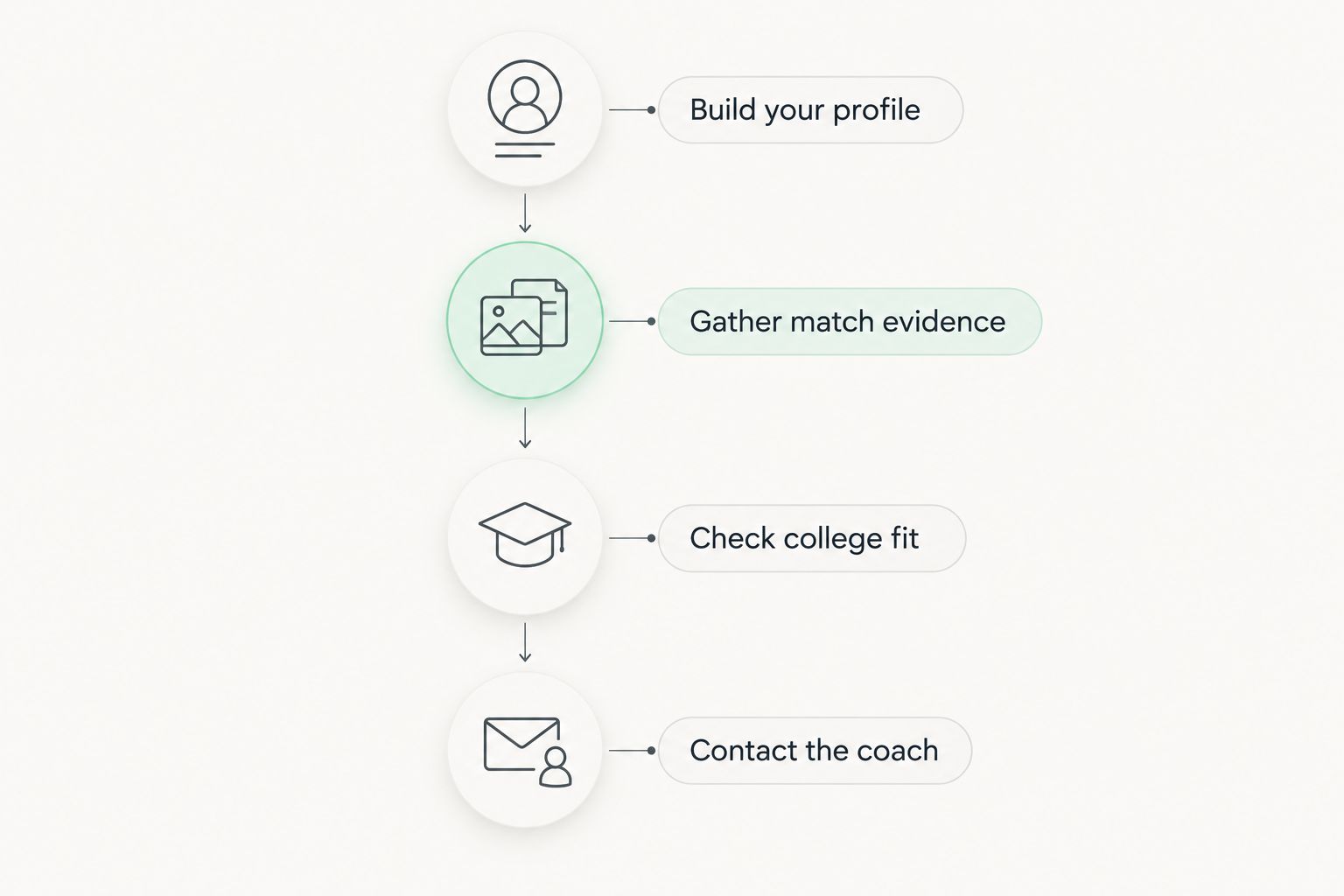
A useful wrestling recruiting workflow connects your evidence to a specific college conversation. Follow this sequence instead of opening accounts and waiting for attention.
Build your profile
Write a consistent athletic summary with your graduation year, school, current weight class, and relevant competition history. Label any projected college weight class as a goal rather than a current fact. Update the same summary wherever you use it.
Gather match evidence
As a working starting point, select 3 full matches that show different situations rather than relying only on a highlight reel. Identify the event and opponents clearly. Choose footage that lets a coach follow the action; the recommendation is an organizational starting point, not a college requirement.
Check college fit
Read the team's published roster and coaching information. Add 2 academic questions to your research notes: does the college offer your intended field of study, and what admissions requirements apply to you? Ask the program directly about athletic questions the website cannot resolve.
Contact the coach
Send a concise introduction with 1 profile link, your graduation year, current weight class, and a specific reason you are interested in the school. Follow the program's published contact instructions. Ask a question that advances the conversation rather than requesting a general assessment of your chances.
The sequence matters: accurate information comes before distribution, and school research comes before a personalized message. It gives each website a clear role instead of asking one resource to do everything.
Which wrestling recruiting website should you choose?
RecruitMyGame is the best overall pick here for high school student-athletes who want profile building and college-fit insights together. Choose NCSA instead when your main need is recruiting guidance, or SportsRecruits when organizing profiles, video, and communication is the priority.
Use Trackwrestling and official college athletics websites as supporting sources regardless of your primary platform. They serve different purposes: one helps document competition history; the other helps you investigate an individual program.
For your 2026 recruiting plan, choose the next action before choosing another website. If your profile is already clear, spend your effort checking schools and improving outreach rather than rebuilding the same information elsewhere.
Build your recruiting profile
Explore profile building, roster insights, and coach-fit research for high school student-athletes.
FAQ
What's the best wrestling recruiting website in 2026?
RecruitMyGame is the best overall pick in this guide for high school student-athletes seeking profile building and college-fit insights together. NCSA and SportsRecruits serve different priorities: recruiting guidance and profile organization, respectively.
Is NCSA better than SportsRecruits for wrestling?
NCSA is the more relevant choice here for recruiting guidance, while SportsRecruits suits profile, video, and communication organization. Choose according to the task you need help completing, and confirm the wrestling-specific offering before committing.
Can Trackwrestling replace a college recruiting profile?
No, Trackwrestling competition records do not replace a complete college recruiting profile. Use results alongside your graduation year, academic information, match footage, and direct coach communication.
What should I put on a wrestling recruiting profile?
Include your graduation year, school, current weight class, competition history, academic information, and clearly identified match footage. Distinguish current facts from goals, including any projected college weight class.
Does a recruiting website guarantee a wrestling scholarship?
A recruiting profile or fit insight does not establish a scholarship offer. Ask the college directly about recruiting interest and any financial assistance, and confirm the terms through the institution.
Should I send highlights or full wrestling matches to coaches?
Make full-match footage available alongside any highlights so coaches can assess sequences in context. Follow each program's instructions and identify the event and opponents clearly.
How do I know whether a college needs my weight class?
Ask the coaching staff directly about recruiting priorities. A published roster shows listed athletes, not a confirmed future opening.
One last thing
A missing wrestler on a published roster is not proof of a recruiting opening. The useful question is not simply whether you can find your weight class listed; it is what the coach is recruiting for your graduation year.
Before your next 2026 outreach message, write down one program-specific question that a roster cannot answer. Send that question with accurate athletic information. A recruiting website should help you start that conversation, not become a substitute for it.