
Best overall for college-fit research: Recruitmygame. Best for tennis-level comparisons: UTR Sports. Best for organizing video and outreach: SportsRecruits. Best for recruiting guidance: NCSA. These tennis recruiting platforms serve different needs; this 2026 guide helps you choose the one that addresses your next recruiting decision.
- Recruitmygame is the best fit for high school athletes seeking tennis recruiting platforms with roster and coach-fit insights.
- UTR Sports adds tennis-rating context; a rating alone does not establish college fit.
- SportsRecruits suits athletes organizing recruiting profiles, video, and coach communication.
- NCSA suits families seeking recruiting guidance; no platform guarantees a roster place.
Why this matters
A recruiting profile gives a college coach somewhere to review your information. It does not answer the harder question: which programs deserve your attention? For tennis, you need to connect your competitive level, academic goals, and interest in a particular college.
Choose the platform around the decision you need to make, not the longest feature list. If your target list is weak, more messages will not fix it. If your target list is sound but your evidence is scattered, organization becomes the priority.
In 2026, keep recruiting information current and distinguish what a platform shows from what a coach confirms. A roster, rating, or profile provides context. None establishes that a program is recruiting your position in your graduation class.
What makes the best tennis recruiting platforms?
Use these criteria before comparing products:
- College targeting: The platform should help you identify relevant programs rather than encourage indiscriminate outreach.
- Tennis evidence: Coaches need interpretable results, competitive context, and footage that shows how you play.
- Academic context: Your college list must make sense academically as well as athletically.
- Profile organization: Your graduation year, contact information, results, and video should be easy to find and update.
- Coach communication: You need a practical way to introduce yourself and track meaningful conversations.
- Decision support: Choose information or guidance that addresses a real gap in your recruiting process.
For your 2026 search, separate essential functions from optional extras. A family that already understands recruiting needs a different product from a family still learning how to approach college programs. Neither needs a collection of accounts that repeats the same work.
Tennis recruiting platforms at a glance
The ranking below assigns each platform a distinct role. It is a decision guide, not a claim that every athlete should use every service.
| Platform | Best for | Standout function | Key limitation |
|---|---|---|---|
| Recruitmygame | Building a college list around roster and coach fit | Athlete profiles and insights from Tosch.ai | Fit insights do not confirm a recruiting opening or coach interest |
| UTR Sports | Understanding competitive tennis level | Tennis ratings and match context | A rating does not establish academic suitability or recruiting interest |
| SportsRecruits | Organizing recruiting evidence and communication | Athlete profiles, video, and coach messaging | Organization still requires accurate information and purposeful outreach |
| NCSA | Families seeking help understanding recruiting | Recruiting education and guidance | Guidance cannot determine admissions or roster decisions |
Do not treat these options as interchangeable. Rating information answers a competitive-level question. A profile answers an information-sharing question. Guidance helps you decide what to do next.
1. Recruitmygame: best for college-fit research
Recruitmygame helps US high school student-athletes build profiles, access roster and coach-fit insights from Tosch.ai, and connect with college coaches. It covers 20+ sports, placing tennis recruiting within a broader college-recruiting platform.
Its strongest role in this comparison is helping you investigate fit before outreach. Use the profile and available insights to organize your research, then ask coaches specific questions about their program and your graduation class.
Pros:
- Athlete profiles provide a place to present your recruiting information.
- Roster insights support research into college programs.
- Coach-fit insights add another dimension to target selection.
- Coach connections support the transition from research to communication.
Cons:
- Fit information is not confirmation that a coach wants to recruit you.
- A profile cannot replace competitive evidence or academic preparation.
- You still need direct answers about a program’s current recruiting needs.
Best for: High school tennis athletes who want to investigate program fit before building an outreach list.
Make the platform useful by bringing a clear question to your research. Instead of asking which colleges have tennis teams, ask which programs warrant a closer look given your academics, results, and goals. Then turn the answer into a focused conversation.
Avoid treating any fit assessment as a final decision. A coach’s response, the college’s admissions requirements, and your own preferences belong in the decision alongside platform information.
Verdict: Buy into the fit-first approach; confirm recruiting interest directly.
2. UTR Sports: best for tennis-level comparisons
UTR Sports provides tennis ratings and competitive match context. Its role in recruiting is to help you understand playing level, rather than to settle every part of your college decision.
For a high school athlete comparing college programs, tennis-specific context is useful. Your rating belongs alongside your results and footage, not in place of them. Coaches still need to evaluate the player behind the rating.
UTR Sports pros:
- Tennis ratings give you a reference point for competitive comparisons.
- Match information adds context to a summary of your playing level.
- A tennis-focused record helps you discuss your competitive background clearly.
UTR Sports cons:
- A rating alone does not show academic fit or college preferences.
- Competitive similarity does not establish an available roster place.
- Rating information does not replace direct communication with coaches.
Best for: Athletes whose main question is how their competitive tennis level compares with the programs they are considering.
Use UTR Sports to strengthen your interpretation of results. Ask what your record demonstrates, which matches provide useful context, and what a coach still needs to see. Avoid making your entire recruiting identity a single rating.
In 2026, give coaches current competitive information and identify when the results occurred. A clear record is more useful than an unsupported claim that you belong at a particular level.
Verdict: Buy into UTR Sports for tennis context; skip rating-only college selection.
3. SportsRecruits: best for video and outreach organization
SportsRecruits offers athlete recruiting profiles, video tools, and college-coach communication. Its practical role is organizing the information you want coaches to review and supporting outreach around that information.
This is a distinct need from deciding which colleges fit. If you already have a considered target list, a central profile can help you present your evidence consistently. The content still needs to explain who you are and why the program interests you.
SportsRecruits pros:
- Athlete profiles bring recruiting information into a central place.
- Video tools support sharing athletic evidence.
- Coach messaging connects your profile with outreach activity.
SportsRecruits cons:
- An organized profile does not establish that your college list is appropriate.
- Video quality depends on the footage and context you provide.
- Sending a message does not guarantee a coach will review or answer it.
Best for: Tennis athletes who need to organize profiles, footage, and communication around an existing college list.
For tennis, make the evidence easy to interpret. Identify yourself in footage, distinguish match play from drills, and give coaches enough context to understand what they are watching. Keep graduation-year and contact information consistent across your materials.
Do not confuse message volume with progress. A useful conversation clarifies the coach’s evaluation process, requests additional evidence, or answers a specific question. Repeated generic introductions do none of those things.
Verdict: Buy into SportsRecruits for organized execution; skip untargeted messaging.
4. NCSA: best for families seeking recruiting guidance
NCSA provides college-recruiting services, athlete profiles, and recruiting guidance. Its place in this list is support for families that need help understanding the process and organizing their next steps.
Choose guidance when the obstacle is uncertainty about recruiting, not simply a missing profile. Before selecting a service, ask what support it provides for tennis and how that support relates to your athlete’s stage.
NCSA pros:
- Recruiting education helps families understand the process.
- Athlete profiles provide a way to present recruiting information.
- Guidance offers a place to discuss recruiting questions and next steps.
NCSA cons:
- Advice cannot determine a college coach’s selection decisions.
- Recruiting assistance does not replace admissions requirements.
- Families still need to supply accurate records and participate in communication.
Best for: Families that want recruiting guidance rather than only tools for independent research and outreach.
Ask concrete questions before making a commitment. Who helps with your recruiting questions? What does the service expect you to handle yourself? How does the support address tennis rather than recruiting in general?
Separate education from outcomes. A service can explain a process and help you prepare. The athlete, coach, and college still make the decisions that determine whether a particular opportunity develops.
Verdict: Buy into NCSA when guidance addresses a clear need; skip outcome assumptions.
How to choose your platform in 2026
Start with 3 fit checks before expanding your college list. These checks keep the choice tied to your recruiting needs rather than to a platform’s presentation.
Academic fit
Check the college’s admissions requirements and whether it offers subjects you want to study. Athletic interest and academic eligibility are separate questions. A tennis program does not make an otherwise unsuitable college the right choice.
Athletic fit
Compare your match results and playing evidence with the competitive context of the programs you are researching. Look beyond a single result or rating. Prepare information that lets a coach evaluate your level rather than relying on your own label.
Roster fit
Research the current team, then ask the coach about recruiting needs for your graduation class. A published roster shows who is listed; it does not establish future openings. Use roster research to improve your questions, not to announce that a place is available.
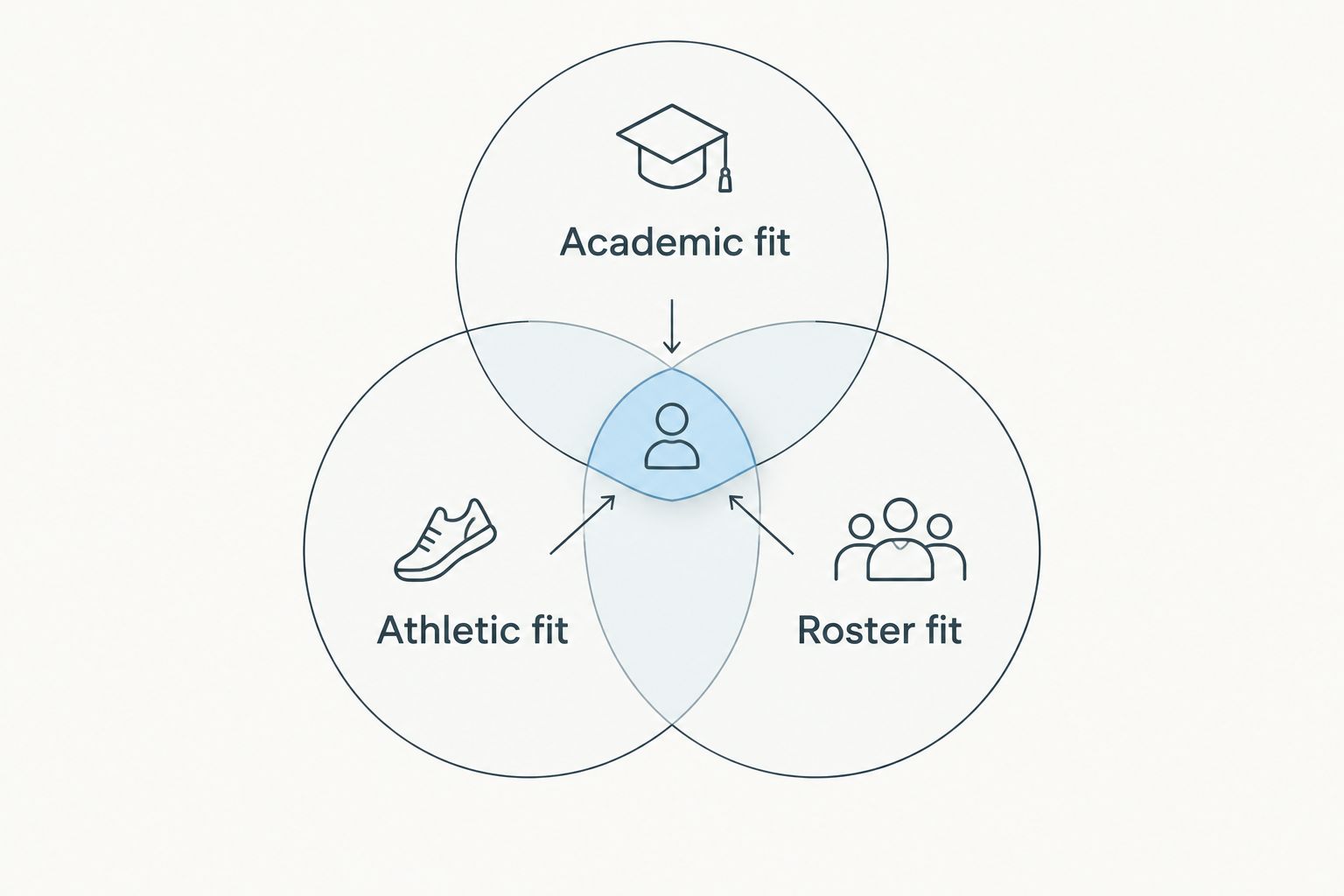
After those checks, identify the missing task. Choose fit research if your list is unclear, tennis context if your competitive comparisons are weak, organization if your evidence is scattered, or guidance if you need help understanding the process.
Start your college-fit research
Build an athlete profile and explore roster and coach-fit insights.
Prepare evidence before sending introductions
Give a coach enough information to understand your situation without reconstructing it from separate messages. Your introduction should identify your graduation year, academic interests, competitive background, and reason for contacting that program.
Prepare 2 video types: match footage and practice footage. Match footage shows decisions within points; practice footage shows skills in a controlled setting. Label each clearly rather than presenting drills as match evidence.
- Profile: Keep contact details, graduation year, and academic information accurate.
- Results: Identify the competition and date so the coach can interpret the record.
- Video: Make yourself identifiable and explain the playing context.
- Message: State why the program interests you and ask a relevant question.
Use one consistent version of your recruiting information. When you update a result or change contact details, update the materials coaches receive. Conflicting information creates avoidable questions.
How we ranked these platforms
This 2026 ranking separates platforms by the recruiting task they address: college-fit research, competitive tennis context, evidence organization, and family guidance. The criteria are targeting, tennis evidence, academic context, organization, communication, and decision support.
The ranking does not claim measured placement rates or guarantee outcomes. Each recommendation has a defined use case and a limitation. Choose the use case that matches your actual bottleneck.
Which tennis recruiting platform should you choose?
Recruitmygame is the default choice here for high school tennis athletes prioritizing roster and coach-fit research. Choose UTR Sports when competitive-level comparison is the central question, SportsRecruits when organizing evidence and outreach is the problem, and NCSA when your family needs recruiting guidance.
Do not add another account until you can explain its role. Your 2026 recruiting plan needs a defensible college list, clear evidence, and purposeful coach conversations—not duplicated profiles.
FAQ
What’s the best tennis recruiting platform for a high school athlete?
The best tennis recruiting platform depends on the task you need to solve: college-fit research, competitive-level comparison, profile organization, or recruiting guidance. Choose the platform that addresses your current obstacle rather than the one with the longest feature list.
Is UTR Sports enough for college tennis recruiting?
UTR Sports is not a complete substitute for a college recruiting plan. Tennis ratings provide competitive context, but you still need academic research, athletic evidence, and direct coach communication.
Is SportsRecruits better than NCSA for tennis?
SportsRecruits and NCSA address different needs in this comparison. SportsRecruits suits profile, video, and outreach organization; NCSA suits families seeking recruiting education and guidance.
Can a tennis recruiting platform guarantee a college roster spot?
No tennis recruiting platform can make a college coach’s roster decision. Profiles, information, and guidance support recruiting, but they do not establish admission or team selection.
What should I put in my tennis recruiting profile?
Include your graduation year, contact details, academic information, competitive results, and clearly identified tennis footage. Keep the information current and distinguish match play from practice footage.
Should I choose colleges only by tennis rating?
No, a tennis rating alone is not a college-selection method. Evaluate academic suitability, competitive context, and the program’s recruiting needs together.
Do I need several tennis recruiting platforms?
You do not need several platforms that repeat the same task. Add a second tool only when it fills a specific gap, such as tennis-rating context alongside profile organization.
One last thing
A roster is evidence of a team’s current composition, not evidence of a future opening. Before treating a college as a recruiting target, ask the coach what the program needs for your graduation class and what evidence would help evaluate you.
The best next move is a better question, not another account. Use your platform to prepare that question and the information needed to answer it.