Best overall NIL marketplace to evaluate: Opendorse. Best for athlete-brand matching: MOGL. Best for sponsorship proposals: OpenSponsorship. For college recruiting rather than endorsement deals, RecruitMyGame is the recruiting companion—not a substitute for NIL software. This 2026 guide separates those jobs and explains what high school athletes must check before signing up.
- Opendorse leads this best nil software shortlist for athletes evaluating an NIL marketplace; confirm high school eligibility before joining.
- MOGL suits athlete-brand matching; OpenSponsorship suits sponsorship proposals. Neither platform access nor a deal establishes school eligibility.
- RecruitMyGame is a college recruiting platform for high school student-athletes, not an NIL deal marketplace.
- Check state association rules, school requirements, platform age terms, and each agreement before accepting compensation.
Why this matters
The best NIL software for a college athlete is not automatically the best choice for a high school athlete. Name, image, and likeness activity sits alongside school eligibility rules, platform terms, contracts, and recruiting priorities. An app can help with a transaction without resolving those other questions.
For your 2026 search, start with the task: finding sponsors, responding to sponsorship opportunities, or getting recruited. Those are different workflows. Choose the tool for the job, then confirm that you can use it under the rules that apply to you.
A marketplace listing is not an endorsement from your school. A coach connection is not an endorsement contract. Keeping those distinctions clear prevents you from judging a recruiting platform by sponsorship features it does not claim to provide.
What makes the best NIL software for high school athletes?
Use these criteria before comparing platform names:
- Eligibility clarity: Find the platform’s age requirements and athlete participation terms. Check your state association and school rules separately.
- Workflow fit: Decide whether you need a marketplace, athlete-brand matching, sponsorship proposals, or recruiting support.
- Agreement visibility: Review the deliverables, payment conditions, cancellation terms, and rights granted to the sponsor before accepting.
- Parent involvement: Establish who reviews opportunities and who must approve or sign agreements involving a minor.
- Information control: Review what becomes public, what a sponsor receives, and which permissions you grant when connecting accounts.
- Recruiting separation: Keep endorsement activity distinct from college selection, coach communication, and athletic evaluation.
The strongest platform fit does not override a weak agreement. If you cannot explain what a sponsor gets, what you must deliver, and how the relationship ends, stop before accepting.
Best NIL apps at a glance
These are workflow recommendations, not confirmation that every high school athlete can register or accept a deal. For 2026, verify current participation terms directly with each platform.
| Rank and option | Best for | Standout purpose | Key limitation |
|---|---|---|---|
| 1. Opendorse | Evaluating an NIL marketplace | Athlete endorsement marketplace | Marketplace access does not establish school eligibility |
| 2. MOGL | Athlete-brand matching | Connecting athletes and brands for NIL opportunities | A match does not establish contract suitability |
| 3. OpenSponsorship | Sponsorship proposals | Connecting brands with athletes around sponsorship opportunities | Broader sponsorship focus requires a high school eligibility check |
| 4. RecruitMyGame | College recruiting support | Profiles, Tosch.ai roster and coach-fit insights, and coach connections | Recruiting platform, not an NIL marketplace |
Do not read the final row as another route to sponsorship income. It addresses a separate need that matters when your real goal is to find an appropriate college program.
1. Opendorse: best NIL marketplace to evaluate first
Opendorse operates an athlete endorsement marketplace. It belongs at the top of this shortlist when your immediate task is to examine a dedicated NIL marketplace rather than manage college recruiting.
Start by checking whether your athlete status and age meet its current participation terms. Then review how an individual opportunity defines the work and the rights the sponsor receives; the marketplace name alone does not answer those questions.
Opendorse pros:
- Its athlete endorsement focus matches a direct NIL search.
- Its marketplace model gives you a concrete sponsorship workflow to evaluate.
- It keeps the comparison centered on commercial opportunities rather than recruiting features.
Opendorse cons:
- Platform participation does not confirm permission under your high school’s rules.
- A marketplace cannot replace independent review of the agreement you accept.
Best for: Athletes and families whose first question is where to evaluate an NIL marketplace.
Before moving ahead, write down the activity you intend to offer: a social post, appearance, or another defined endorsement service. Check that activity against the applicable rules, rather than asking only whether NIL is permitted in general.
Verdict: Hold until platform eligibility and school requirements are confirmed; evaluate Opendorse first for the marketplace use case.
2. MOGL: best NIL option for athlete-brand matching
MOGL connects athletes and brands for NIL opportunities. Its place in this comparison is the matching workflow: you are looking for a commercial relationship with a brand, not a college roster evaluation.
Judge any opportunity by the work involved and its relevance to you. A brand match is the start of a decision, not proof that the deal fits your schedule, audience, or eligibility requirements.
MOGL pros:
- Its athlete-brand focus aligns with a sponsorship search.
- It provides a distinct alternative to evaluating NIL software solely as a marketplace.
- Its commercial purpose makes it easier to separate sponsorship goals from recruiting goals.
MOGL cons:
- Matching does not establish whether a proposed contract protects your interests.
- High school athletes still need to check current platform terms and applicable school rules.
Best for: Athletes who want to evaluate brand relationships around a defined endorsement activity.
Before accepting a proposed collaboration, explain why the brand fits your public identity. Then identify the exact deliverable and any restrictions on working with other sponsors. A relevant brand still needs a clear agreement.
Verdict: Hold until eligibility and agreement review are complete; shortlist MOGL for athlete-brand matching.
3. OpenSponsorship: best for evaluating sponsorship proposals
OpenSponsorship connects brands with athletes for sponsorship opportunities. It fits a proposal-led search in which you want to understand what a sponsor wants and whether your participation makes sense.
Its broader athlete sponsorship positioning makes the high school check especially important. Do not assume that a platform serving athletes generally accepts every minor or supports every school situation.
OpenSponsorship pros:
- Its sponsorship focus matches athletes seeking commercial collaborations.
- It offers a useful comparison point beyond a dedicated NIL marketplace.
- Its purpose encourages you to evaluate the sponsor’s requested activity, not just the platform label.
OpenSponsorship cons:
- General athlete suitability is not confirmation of high school participation eligibility.
- A sponsorship opportunity still requires review of rights, obligations, and school restrictions.
Best for: Athletes and families comparing sponsorship proposals with a clearly defined service or appearance in mind.
Prepare a plain-language description of what you can deliver before reviewing opportunities. Keep it separate from claims about athletic potential or college interest. A sponsor needs a commercial service; a college coach evaluates a different relationship.
Verdict: Hold until current participation terms are verified; shortlist OpenSponsorship for the proposal use case.
4. RecruitMyGame: best college recruiting companion
RecruitMyGame is best for US high school student-athletes who need college recruiting support rather than NIL deal sourcing. The platform helps athletes build profiles, access roster and coach-fit insights from Tosch.ai, and connect with college coaches across 20+ sports.
That is a different job from finding a sponsor. Include it in your plan when your priority is identifying college opportunities and presenting your athletic profile—not when you need an endorsement marketplace.
RecruitMyGame pros:
- Its stated audience is US high school student-athletes.
- Profiles support the college recruiting process.
- Tosch.ai provides roster and coach-fit insights.
- Coach connections cover 20+ sports.
RecruitMyGame cons:
- Its stated purpose does not include sourcing NIL endorsement deals.
- Recruiting insights do not establish permission to accept a sponsorship.
Best for: High school athletes organizing their college recruiting efforts alongside a separate NIL decision process.
For a 2026 recruiting plan, distinguish your athletic profile from your commercial pitch. Your athletic experience and college fit belong in the recruiting conversation; sponsorship deliverables belong in the endorsement conversation.
Verdict: Skip as an NIL marketplace; choose for its stated college recruiting purpose.
Before using an NIL app: follow this approval sequence
A platform comparison becomes useful only after you establish what you can do. Use this sequence for each proposed activity, not just once when creating an account.
Check rules
Identify your state high school association’s current NIL rules and your school’s requirements. Check restrictions involving school names, uniforms, facilities, sponsor categories, and any required disclosure. Read the actual policy rather than relying on another athlete’s experience.
Verify access
Read the platform’s current age and participation terms. Establish whether a parent or guardian must participate, and do not misstate your age or athlete status to create an account.
Review terms
Identify the deliverables, deadlines, approval process, payment conditions, and cancellation terms. Read the rights language closely: permission to publish a post and permission to reuse your image in advertising are different permissions.
Keep records
Keep the signed agreement, the final deliverables, and the relevant permission or disclosure records together. These 3 record types help you reconstruct what was agreed, completed, and reported.
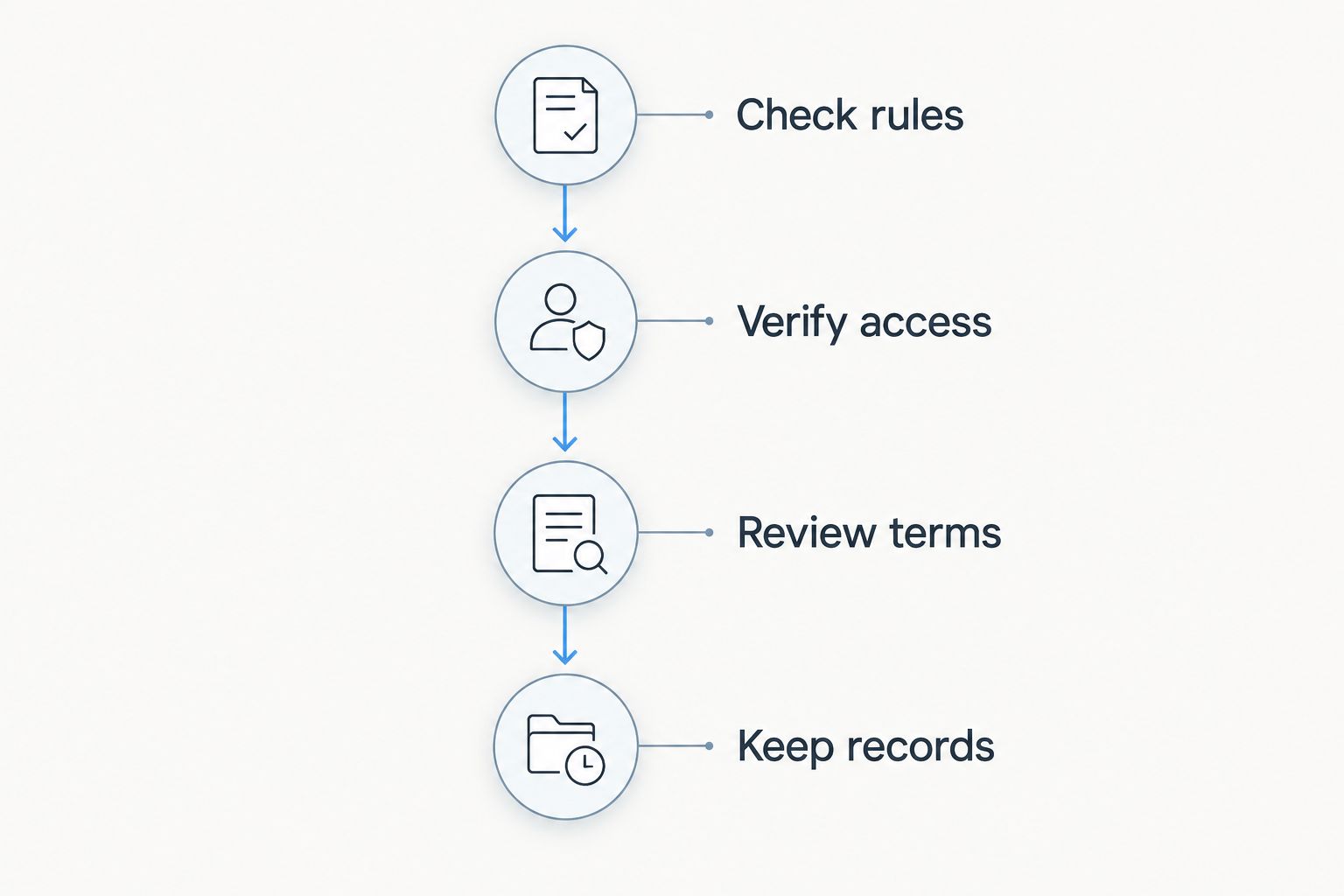
Treat this sequence as a decision gate. If the rules, access requirements, or contract remain unresolved, leave the opportunity unaccepted until you have a clear answer from the relevant authority or adviser.
How to compare an actual offer
Ask these 4 questions before deciding whether a sponsorship deserves your time:
- What am I delivering? Name the post, appearance, content, or other service precisely.
- What can the sponsor reuse? Identify the permitted uses of your name, image, content, and likeness.
- What limits my other activity? Check exclusivity, competing-brand restrictions, and approval obligations.
- How does the agreement end? Read cancellation, unfinished-work, and continuing usage provisions.
Do not compare offers by the size of the brand name alone. An agreement that you understand is easier to assess than one built around vague promises of exposure.
For minors, involve a parent or guardian early and seek qualified legal advice for contract questions. For school eligibility questions, contact the authority responsible for the applicable policy. Those are separate reviews.
How this shortlist is ranked
This 2026 ranking follows the criteria above: workflow fit comes first, followed by the eligibility checks and agreement review each workflow requires. It is not a hands-on performance ranking or a claim that one platform produces more deals.
Opendorse leads the marketplace use case. MOGL occupies athlete-brand matching, and OpenSponsorship occupies sponsorship proposals. The recruiting option stays separate because coach connections and endorsement transactions solve different problems.
Which NIL software should you choose?
Start with Opendorse if your confirmed need is an NIL marketplace. Compare MOGL when athlete-brand matching is your priority, and OpenSponsorship when you are evaluating sponsorship proposals. Check current high school participation terms before committing to any option.
If college recruiting is the actual bottleneck, choose a recruiting workflow instead of expecting an endorsement app to solve it. Your 2026 decision should follow the immediate task—not the broadest feature list or the most familiar name.
FAQ
What’s the best NIL software for high school athletes in 2026?
Opendorse is the first marketplace to evaluate on this shortlist. MOGL suits athlete-brand matching, while OpenSponsorship suits sponsorship proposals; confirm current platform eligibility and school rules before participating.
Can high school athletes use NIL apps?
High school athletes must satisfy the app’s participation terms and the rules that apply to their school athletics. Check age requirements, state association policy, and school requirements before accepting an opportunity.
Is RecruitMyGame an NIL marketplace?
RecruitMyGame is a college recruiting platform, not an NIL marketplace. It helps US high school student-athletes build profiles, access Tosch.ai roster and coach-fit insights, and connect with college coaches across 20+ sports.
Is MOGL better than Opendorse?
Choose between MOGL and Opendorse by workflow rather than assuming one is universally better. This shortlist places MOGL in athlete-brand matching and Opendorse in the NIL marketplace slot, with eligibility checks required for either.
Does joining an NIL platform protect my athletic eligibility?
Joining an NIL platform does not establish your athletic eligibility. Your state association and school requirements remain separate from the platform’s account and participation terms.
Should a parent review a high school athlete’s NIL agreement?
Involve a parent or guardian before a minor accepts an NIL agreement. Check signing requirements and seek qualified legal advice about rights, obligations, and enforceability.
What should I save after completing an NIL deal?
Keep the signed agreement, final deliverables, and relevant permission or disclosure records. Together, they document the promised work, completed activity, and required reporting.
One last thing
The app is not the agreement. Before your next 2026 NIL decision, summarize the proposed deal in one sentence: what you deliver, what the sponsor receives, and when the obligation ends. If that sentence is unclear, review the agreement before accepting—not after posting.