
Best overall for college-specific gymnastics recruiting: official recruiting questionnaires; best for athlete profiles and coach-fit research: RecruitMyGame. Best for guided recruiting: NCSA; best for direct coach follow-up: a concise email with routine video—choose by the task you need to complete, not by the size of a platform’s promise.
- Official college questionnaires are the best gymnastics recruiting starting point for athletes with specific target programs.
- RecruitMyGame is best for high school athletes seeking profile-building and roster and coach-fit research.
- NCSA is the guided-recruiting option; evaluate gymnastics-specific support before committing.
- Coach email and routine video support direct follow-up, but require you to organize your own outreach.
Why this matters
Gymnastics recruiting involves different jobs: showing your ability, identifying appropriate programs, submitting information, and starting a conversation. A tool that handles one job does not automatically handle the others. You need a clear process, not another profile to maintain.
For your 2026 search, separate a recruiting platform from a college’s own intake process. A platform helps organize or present your information; an official questionnaire submits information through the route that a particular program publishes. Neither establishes that a coach has reviewed your routines or wants to recruit you.
The strongest starting point is a target-program list paired with current routine video. Choose tools after you know what information those programs request and what you need help managing.
What makes the best gymnastics recruiting option?
Judge each option against these criteria before choosing one:
- Program relevance: Can you identify the gymnastics programs and discipline you actually want to pursue? Broad college coverage is not the same as useful gymnastics coverage.
- Athlete presentation: Can you communicate your graduation year, academic information, event strengths, competition context, and video clearly?
- Fit research: Does the option help you investigate a program, rather than simply collect college names? Distinguish published roster information from confirmed recruiting needs.
- Coach communication: Does it support an appropriate next step, such as a questionnaire submission or an individual message? A contact listing is not evidence of coach interest.
- Maintenance burden: Can you keep your information accurate without maintaining conflicting versions across several places?
- Gymnastics-specific support: Can the provider explain how its service handles your discipline and recruiting questions? Verify this before treating a multisport platform as your main system.
Use these criteria during your 2026 evaluation. Ask providers to demonstrate the workflow you intend to use, rather than accepting a general description of recruiting support.
Gymnastics recruiting options at a glance
These recommendations compare different recruiting routes, not interchangeable software subscriptions. The ranking follows the job each option does best; it does not claim measured differences in recruiting outcomes.
| Rank | Option | Best for | Standout function | Key limitation |
|---|---|---|---|---|
| 1 | Official college recruiting questionnaires | Submitting information to specific programs | A program’s published recruiting intake route | Each submission applies to that program, not your entire search |
| 2 | RecruitMyGame | Athlete profiles and fit research | Profiles, roster and coach-fit insights from Tosch.ai, and coach connections | Verify gymnastics coverage and program relevance before relying on it |
| 3 | NCSA | Athletes seeking recruiting guidance | Athlete profiles and recruiting support | Evaluate the actual gymnastics-specific service, not the general offering |
| 4 | Coach email with routine video | Personalized follow-up | A direct message built around your program interest and evidence | You manage targeting, records, and follow-up yourself |
1. Official college questionnaires: best for program-specific intake
An official recruiting questionnaire is the form a college program publishes to collect prospective-athlete information. It is the clearest starting point when you already know which gymnastics programs interest you. Follow the instructions on the program’s current athletics website rather than assuming every school requests the same information.
Official college questionnaire pros:
- Uses the recruiting intake route the program publishes.
- Shows which athlete information that program requests.
- Lets you tailor submissions to a defined college list.
- Keeps the first step focused on a real program rather than general exposure.
Official college questionnaire cons:
- Requires separate work for each target program.
- Does not replace research into academics, gymnastics fit, or campus preferences.
- Submission alone does not establish coach interest or a next step.
Best for: Gymnasts who have identified specific colleges and want to submit their information through the appropriate channel.
Before submitting, check that your video links open and that your graduation year and contact details match your other materials. Keep a record of the program, submission date, and any instructions you receive. Treat a confirmation message as a submission record, not a recruiting decision.
For 2026 recruiting, use the questionnaire currently published by the program. A saved form or an old instruction sheet is not a substitute for checking the current route.
Verdict: Buy into this workflow first when you have a defined target list.
2. RecruitMyGame: best for athlete profiles and fit research
This college recruiting platform helps US high school student-athletes build profiles, access roster and coach-fit insights from Tosch.ai, and connect with college coaches. Its stated scope covers 20+ sports. Those functions fit athletes who need help presenting themselves and investigating colleges before outreach.
For a gymnast, the decision hinges on discipline-specific relevance. Before making the platform your main recruiting workspace, confirm that its gymnastics coverage and college information match your search. Multisport scope alone does not answer that question.
RecruitMyGame pros:
- Supports athlete profile-building.
- Provides access to roster and coach-fit insights from Tosch.ai.
- Includes connections with college coaches within its stated platform purpose.
- Serves US high school student-athletes across 20+ sports.
RecruitMyGame cons:
- You must verify gymnastics-specific coverage before relying on it for this sport.
- Fit insights do not replace a coach’s confirmation of recruiting interest.
- A profile does not replace a target program’s requested intake steps.
Best for: High school athletes who want profile-building and fit research alongside their college-specific recruiting work.
Evaluate the platform with an actual recruiting task. Choose a college you are investigating, identify the information you need, and check whether the available insights help answer that question. Keep confirmed facts separate from your own interpretation of the roster.
Verdict: Hold until gymnastics coverage matches your target programs; then use it for profiles and fit research.
3. NCSA: best for athletes seeking recruiting guidance
NCSA provides athlete profiles and recruiting support. It belongs on your shortlist when your main need is help understanding and organizing the recruiting process, rather than simply submitting information to a college.
Evaluate the guidance you would actually receive. Ask how gymnastics questions are handled, what responsibilities remain with your family, and how the service helps you move from a profile to a practical next step.
NCSA pros:
- Offers an athlete-profile route for presenting recruiting information.
- Provides recruiting support beyond a college’s individual questionnaire.
- Gives families a service to evaluate when they want help organizing the process.
NCSA cons:
- You still need to verify program fit and keep athlete information current.
- General recruiting support is not a substitute for gymnastics-specific advice.
- A service relationship does not establish that a target coach is interested.
Best for: Athletes and families who want recruiting guidance and can explain the specific help they need.
During a 2026 evaluation, ask for a clear description of the support attached to the service you are considering. Separate educational guidance, profile functions, and any communication assistance; those are different benefits. Judge the service against your actual bottleneck.
Verdict: Hold until the guidance offered answers your gymnastics-specific questions.
4. Coach email with routine video: best for direct follow-up
A personalized coach email gives you a way to explain who you are, why a program interests you, and where a coach can view your gymnastics. It is a communication route, not a recruiting database or managed service.
Use the contact route and instructions published by the college. Build the message around relevant athlete information and an accessible video link, not a long account of every achievement.
Coach email with routine video pros:
- Lets you explain a specific reason for contacting that program.
- Puts your athlete summary and video together in one message.
- Allows you to ask a clear next-step question.
- Works alongside questionnaires and recruiting profiles.
Coach email with routine video cons:
- Requires you to research contacts and organize follow-up.
- A sent message does not establish that the coach watched your video.
- Generic messages give the coach little program-specific context.
Best for: Athletes who can manage their own outreach and explain why each college belongs on their list.
As an editing exercise, limit your opening to 2 sentences: identify yourself, then state the reason for contacting that program. Include 1 next-step question rather than a list of unrelated requests. These are writing recommendations, not rules imposed by colleges.
Verdict: Buy into this workflow for personalized follow-up; skip mass messages with no program-specific reason.
How to combine the options without duplicating work
The options above work best when each has a defined role. Keep one accurate athlete summary, then adapt it to each program’s instructions instead of creating conflicting versions of your academic details or competition history.
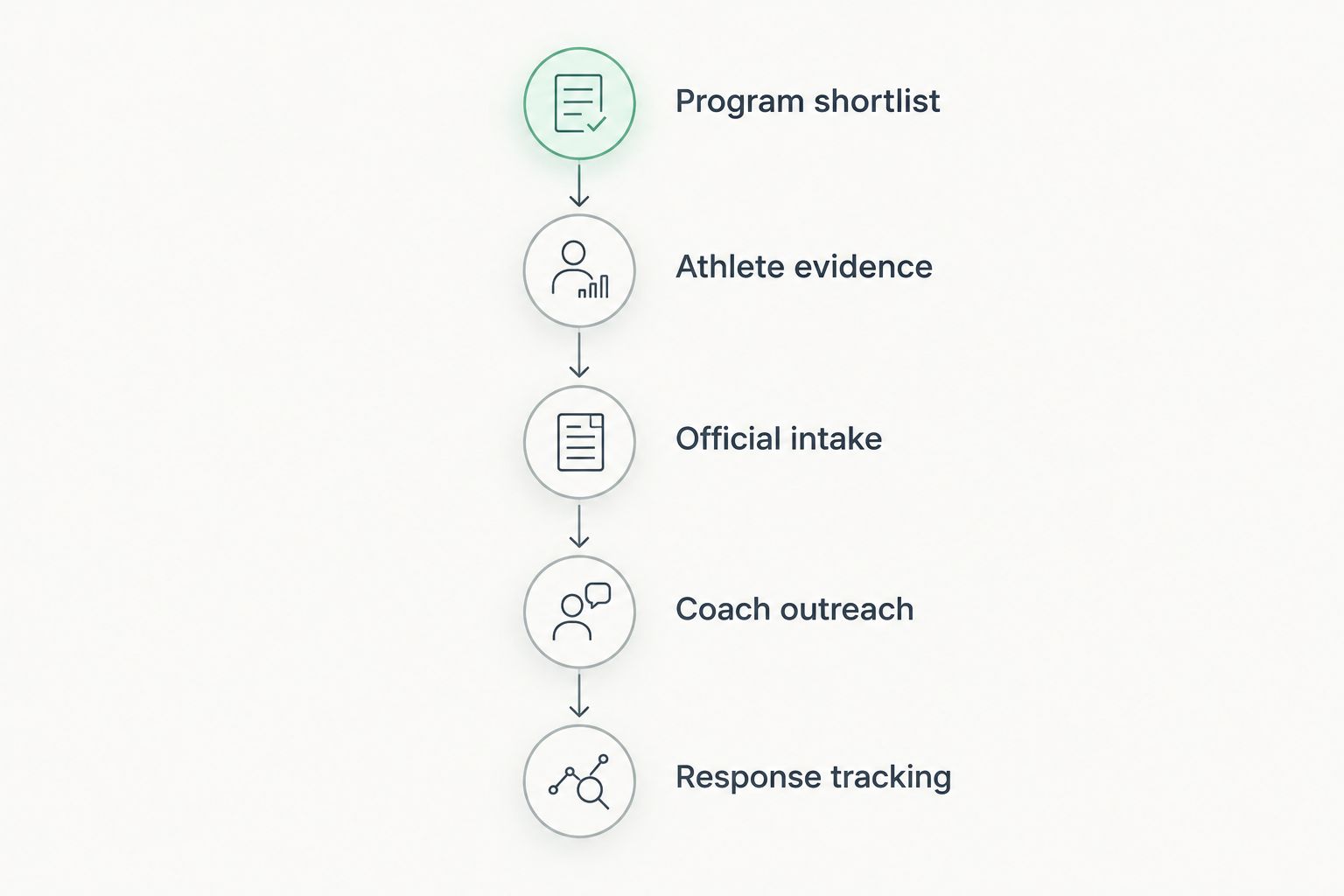
Use this sequence for your 2026 recruiting work:
- Program shortlist: Identify colleges you would genuinely consider attending. Record your academic interests and the gymnastics questions you need answered.
- Athlete evidence: Prepare current routine video and accurate athlete information. Label the material so a viewer understands what they are watching.
- Official intake: Complete each target program’s published questionnaire or requested first step.
- Coach outreach: Send a concise, program-specific message when appropriate under the applicable recruiting rules.
- Response tracking: Record replies, requested materials, and the next action. Separate confirmed coach statements from assumptions.
A platform supports this sequence only if it makes one of these jobs clearer or easier. It should not create a second, disconnected recruiting process.
Before sending materials, use 3 review passes: accuracy, access, and relevance. First check your facts, then open every video link, then confirm that the message explains why you contacted that program. This is a practical quality-control recommendation, not a recruiting requirement.
Check the current rules published by the relevant governing body and college before planning coach contact. NCAA, NAIA, and other college pathways are not interchangeable, and a platform’s features do not override recruiting rules.
How these options were ranked
The ranking uses program relevance, athlete presentation, fit research, communication, maintenance burden, and gymnastics-specific support. Official questionnaires lead for program-specific intake; profile tools, guided services, and direct messages occupy different use-case slots.
These are workflow recommendations, not results from a head-to-head performance test. No ranking here promises admission, a roster place, a scholarship, or a coach response.
Which gymnastics recruiting option should you choose?
Start with official questionnaires if you already have target colleges. Add coach email and routine video for focused follow-up, while keeping your submissions and replies organized.
RecruitMyGame is best for high school athletes who want profile-building and roster and coach-fit research. Confirm gymnastics-specific coverage before making it your main workspace. Choose NCSA when recruiting guidance is the problem you need solved, and evaluate the exact support offered.
Do not choose every option simply because each exists. Choose the smallest combination that handles your current recruiting tasks accurately.
FAQ
What’s the best starting point for gymnastics recruiting in 2026?
Official college recruiting questionnaires are the best starting point when you have specific target programs. Prepare current routine video and accurate athlete information before completing each program’s published intake steps.
Do I need a recruiting platform to contact gymnastics coaches?
A recruiting platform is not required to use a college’s published questionnaire or contact route. Follow the program’s instructions and the applicable recruiting rules, and keep your outreach records organized.
How do I check whether a multisport platform supports gymnastics?
Ask the provider to show how its current service supports your gymnastics discipline and target colleges. Verify relevant profiles, program information, and communication functions rather than relying on the total number of sports covered.
Is NCSA better than emailing coaches myself?
NCSA and direct coach email serve different needs. Evaluate NCSA when you want recruiting guidance; use personalized email when you can manage targeting, athlete materials, and follow-up yourself.
What should I include in a gymnastics recruiting email?
Include your athlete identity, graduation year, relevant academic and gymnastics information, routine video, and a specific reason for contacting the program. Ask a clear next-step question and follow any instructions the college publishes.
Does submitting a questionnaire mean a coach is recruiting me?
No, a questionnaire submission establishes that you submitted information, not that a coach is recruiting you. Treat specific coach replies and requests as separate evidence, and record exactly what the coach communicates.
Can a recruiting platform guarantee a gymnastics roster spot?
Do not treat access to profiles, insights, or coach contacts as a guaranteed roster spot. Recruiting tools support presentation and communication; colleges make their own recruiting and admission decisions.
One last thing
Test your routine links as someone who does not own the files. Open them while signed out, check sharing permissions, and confirm that the intended video appears. A polished profile is not useful evidence if the coach cannot access the routine.