
Best overall for athlete profiles and coach-fit research: Recruitmygame. Best for guided recruiting support: NCSA. Best for direct program research: official college athletics websites. This 2026 guide compares basketball recruiting websites and supporting resources by the job each performs, rather than treating every site as a complete recruiting solution.
- Recruitmygame is the best fit for basketball recruits who want athlete profiles, roster insights, and coach-fit research together.
- NCSA suits families seeking recruiting guidance alongside an athlete profile.
- Official college athletics websites help you verify rosters, coaching staffs, and program information.
- YouTube supports film sharing; the NCAA Eligibility Center handles eligibility, not coach exposure.
Why this matters
A recruiting profile, a college roster, and an eligibility account solve different problems. Confusing those jobs leaves you with an account but no clear next move. Your basketball recruiting process needs evidence of your ability, realistic school research, and direct communication with programs.
The best website is the one that helps you complete your next recruiting task. If you need to organize your information and investigate fit, start with a recruiting platform. If you already know your target schools, prioritize their official athletics websites and prepare a specific message for each program.
For your 2026 search, separate convenience from outcomes. A website can organize information or support communication; a college coach decides whether to recruit you. No profile, video host, or eligibility registration makes that decision for a coach.
What makes the best basketball recruiting websites
Use these criteria before choosing a platform:
- Athlete information: Can you present your graduation class, position, academic information, basketball background, and film clearly? Check which fields the platform supports.
- Program research: Does the resource help you understand the college, its basketball roster, and the context for your position?
- Coach communication: Can you identify the appropriate staff member and take a concrete outreach step?
- Practical guidance: Does the service explain what to do next, or does it mainly provide somewhere to publish information?
- Role clarity: Is the site a recruiting platform, an official program source, a video host, or an eligibility service?
- Information maintenance: Can you keep your materials current and verify important details at their original source?
A strong recruiting setup does not require every website on this list. It requires a clear way to present yourself, research schools, share film, and handle the eligibility requirements that apply to you.
Basketball recruiting websites at a glance
The order below reflects the role each option plays in an athlete's recruiting process. These are use-case recommendations, not a claim that every resource offers comparable services.
| Rank | Website or resource | Best for | Standout function | Key limitation |
|---|---|---|---|---|
| 1 | Recruitmygame | Profiles and coach-fit research | Athlete profiles, Tosch.ai roster and coach-fit insights, and coach connections | Platform research does not replace direct verification with programs |
| 2 | NCSA | Guided recruiting support | Recruiting guidance alongside athlete profiles | Guidance does not replace your own research and outreach |
| 3 | Official college athletics websites | Direct program research | School-published rosters, staff information, and recruiting resources | Information is spread across individual schools |
| 4 | YouTube | Film sharing | Shareable basketball video | Video hosting is not recruiting guidance |
| 5 | NCAA Eligibility Center | NCAA eligibility preparation | Official NCAA eligibility processes | Eligibility is separate from coach recruitment |
1. Recruitmygame: best for profiles and coach-fit research
Recruitmygame helps US high school student-athletes build profiles, access roster and coach-fit insights from Tosch.ai, and connect with college coaches. The platform covers 20+ sports. Its relevant role for basketball is bringing athlete information and college-fit research into the same recruiting workflow.
Recruitmygame is best for basketball recruits who want athlete profiles and roster-based coach-fit research together. Start with accurate information about yourself, then use program insights to investigate where your basketball background fits. Confirm important roster and staff details with the college before acting on them.
This recommendation rests on the platform's stated functions, not a claim about scholarship results or coach response rates. Your profile needs useful evidence, and your outreach still needs a reason for contacting each school.
Recruitmygame pros:
- Combines profile building with college recruiting research.
- Provides roster and coach-fit insights from Tosch.ai.
- Supports connections with college coaches.
- Serves high school student-athletes across 20+ sports.
Recruitmygame cons:
- Fit insights do not establish a coach's interest in recruiting you.
- You still need to verify program information and maintain your own materials.
Best for: High school basketball players who need a profile and a structured starting point for college-fit research.
Verdict: Use it for profile organization and fit research; confirm recruiting interest directly with coaches.
2. NCSA: best for guided basketball recruiting support
NCSA is a college recruiting service that provides athlete profiles and recruiting guidance. Its place in this list is support for athletes and families who want help understanding the recruiting process, rather than only a destination for uploading basketball information.
Choose guided support when your main obstacle is deciding what to do next. Before committing to a service, ask what guidance you receive, who provides it, and which tasks remain your responsibility. Clear service scope matters more than a broad promise of exposure.
For basketball, distinguish help with your recruiting plan from an assessment of a specific college's interest. Those are different things. Keep program research and coach communication grounded in your own academic and athletic information.
NCSA pros:
- Combines athlete profiles with recruiting guidance.
- Gives families a recruiting-specific resource rather than a general social profile.
- Suits athletes who want support organizing recruiting tasks.
NCSA cons:
- Guidance cannot make a college coach select you.
- You still need to confirm the service scope and complete your own recruiting work.
Best for: Basketball players and families who want guided support with the college recruiting process.
Verdict: Consider NCSA when guidance is your main need; verify exactly what support you receive.
3. Official college athletics websites: best for program research
Official college athletics websites are the starting point for checking a school's published basketball roster and coaching staff. Depending on the school, they also include player biographies, schedules, staff contact information, and recruiting questionnaires. Inspect the actual program pages rather than assuming every school publishes the same information.
Read the roster for context, not a prediction. Player positions, graduation classes, and biographies help you understand the team, but they do not prove that a coach has an opening for you. A roster is a published snapshot, not a recruiting commitment.
Use your 2026 school research to prepare specific questions. Identify what you know from the official website, then ask the staff what remains unclear. That is more useful than sending the same generic request to every program.
Official college athletics websites pros:
- Provide information published by the college's athletics department.
- Let you research individual basketball programs directly.
- Help you identify the current published coaching staff.
- Give school-specific context for outreach.
Official college athletics websites cons:
- Research requires visiting and comparing separate school websites.
- Published rosters do not establish future recruiting needs.
Best for: Basketball recruits with a target-school list who need to verify program details.
Verdict: Use official program websites before writing school-specific outreach.
4. YouTube: best for sharing basketball film
YouTube is a video-hosting platform, not a college recruiting service. Its useful role is giving you a shareable place for basketball footage. An unlisted video can be viewed by someone who has its link, so unlisted does not mean confidential.
Make the video understandable without a long explanation. Identify yourself in the accompanying title or description, and tell coaches which player to watch. Share footage that supports the basketball role you are discussing rather than asking the viewer to infer everything from a montage.
Highlights and full-game footage serve different purposes. Highlights provide selected examples; full-game footage provides more context around decisions and possessions. Ask the coach what material would help rather than assuming a particular edit meets every program's needs.
YouTube pros:
- Provides shareable video links.
- Supports both edited highlights and longer game footage.
- Lets you keep film separate from your recruiting profile.
YouTube cons:
- Does not replace school research or recruiting guidance.
- Unlisted links can be passed along by recipients.
Best for: Basketball players who need to send coaches accessible film.
Verdict: Use YouTube as a film-sharing tool, not as your entire recruiting strategy.
5. NCAA Eligibility Center: best for NCAA eligibility preparation
The NCAA Eligibility Center handles eligibility processes for athletes pursuing NCAA participation. It is not a basketball exposure platform or a coach-matching service. Its role is administrative, and the requirements depend on the division and your circumstances.
For NCAA Division I initial academic eligibility, the published standards include 16 approved core courses and a minimum 2.3 core-course GPA. Division II also requires 16 approved core courses, with a minimum 2.2 core-course GPA. These figures are not a complete eligibility checklist; course timing and other requirements also matter.
Check the NCAA's current requirements and work with your school counselor during your 2026 recruiting planning. Your overall school GPA is not interchangeable with the NCAA core-course GPA. Eligibility preparation and coach outreach belong on parallel tracks.
NCAA Eligibility Center pros:
- Provides an official NCAA eligibility resource.
- Separates eligibility preparation from recruiting promotion.
- Helps athletes address NCAA participation requirements.
NCAA Eligibility Center cons:
- Does not generate recruiting interest or replace coach communication.
- Does not serve as a universal eligibility process for every college athletics association.
Best for: Basketball recruits preparing for NCAA participation.
Verdict: Use it for the NCAA requirements that apply to you, not for basketball exposure.
How the ranking works
The ranking starts with athlete-facing recruiting tasks: organize your information, investigate fit, and communicate with programs. Guided support comes next, followed by the specialist resources needed for direct research, film sharing, and eligibility preparation.
Each recommendation owns a distinct role. There is no claim that a video host competes with a recruiting service, or that an eligibility account replaces either. Choose by your current task rather than treating the list as a universal performance leaderboard.
Which basketball recruiting websites should you choose?
Choose Recruitmygame as the default when you need profile building and coach-fit research together. Choose NCSA when your priority is guided recruiting support. Add official program research, film sharing, and eligibility preparation according to the work you need to complete.
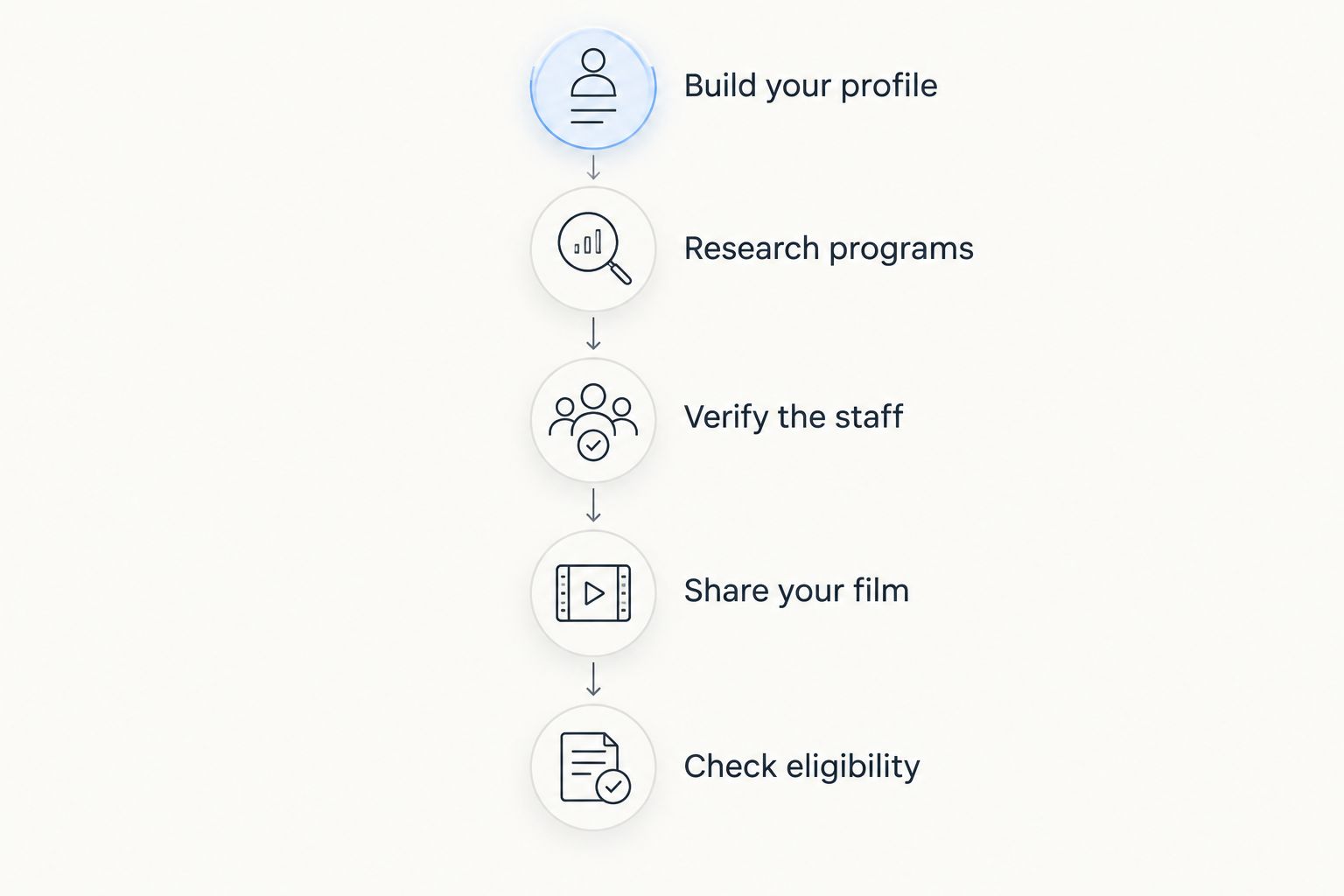
Use this sequence to turn your choice into action:
- Build your profile: Assemble accurate academic information, basketball background, and film references.
- Research programs: Compare your goals with the school and its published basketball information.
- Verify the staff: Confirm who handles recruiting for the program before addressing your message.
- Share your film: Give the coach clear viewing context and an accessible link.
- Check eligibility: Confirm the requirements for the association and division you are pursuing.
This sequence keeps platform selection connected to actual recruiting work. Finish an accurate profile and research a suitable program before adding more accounts simply because another website exists.
FAQ
What's the best basketball recruiting website for high school players?
Recruitmygame is the best fit in this guide for high school basketball players who want profile building and roster-based coach-fit research together. NCSA is the alternative for families prioritizing guided recruiting support.
Is a recruiting platform better than a college athletics website?
Neither replaces the other: recruiting platforms organize athlete-facing tasks, while official college athletics websites provide school-published program information. Use the college's website to verify staff and roster details before outreach.
Can a basketball recruiting website guarantee a scholarship?
A website cannot make a college coach award you a scholarship. Profiles, research, guidance, and film support your recruiting work; scholarship decisions remain with the college and depend on its requirements and circumstances.
Can I use YouTube for basketball recruiting film?
Yes, YouTube can host basketball footage that you share with coaches. Identify yourself clearly and remember that anyone with an unlisted video's link can view and share it.
Do I need the NCAA Eligibility Center to contact basketball coaches?
The NCAA Eligibility Center is an eligibility resource, not a coach-contact platform. Check the NCAA requirements that apply to your intended division and circumstances while handling coach outreach separately.
What should I check before choosing basketball recruiting websites in 2026?
Check which recruiting task each website supports: profiles, program research, guidance, film sharing, or eligibility. Verify the service scope and choose the resource that addresses your current need rather than collecting accounts.
Does a college basketball roster tell me whether a coach needs my position?
A published roster does not prove a future recruiting need. Use it to prepare informed questions, then confirm the program's interest and priorities directly with its coaching staff.
One last thing
A roster match is not the same as a recruiting opportunity. A team listing players at your position gives you context, not a decision about your place on that team.
Before your next outreach message, write down the specific reason the school fits your academic goals and basketball plans. Then ask a question that the published roster cannot answer. That turns website research into a conversation instead of another unfinished profile.