
Best overall for roster and coach fit: RecruitMyGame. Best for NCAA eligibility: NCAA Eligibility Center. Best for NAIA eligibility: PlayNAIA. Best for club-connected recruiting: SportsRecruits. Best for outside scholarship searches: Fastweb. This 2026 guide separates athletic scholarship websites by the job each performs, so you choose a useful tool rather than mistake a profile for a scholarship offer.
- RecruitMyGame leads these athletic scholarship websites for high school athletes prioritizing roster and coach-fit insights.
- NCAA Eligibility Center and PlayNAIA handle eligibility processes, not scholarship matching.
- SportsRecruits suits athletes whose club or school uses its recruiting network.
- Fastweb supports outside scholarship searches; college coaches control athletic recruiting decisions.
Why this matters
An athletic scholarship search involves different decisions: which colleges fit you, whether you satisfy eligibility requirements, and what financial aid a college actually offers. No profile website replaces all of those decisions.
A recruiting profile is a presentation tool, not a scholarship commitment. You still need academic preparation, evidence of your athletic ability, direct communication, and a realistic college list. Choosing the right website helps you organize that work; choosing the wrong category leaves an important task unfinished.
For your 2026 search, separate recruiting services from eligibility portals and outside-award databases. They belong in the same plan, but they do not compete on the same outcome.
What makes the best athletic scholarship websites
Judge each website against its intended job rather than its promises about exposure.
- College fit: Does the service help you evaluate programs against your sport, academic interests, and playing goals?
- Athletic evidence: Can you present information a coach needs, such as your graduation class, position, competition history, and video?
- Coach communication: Does the service support recruiting conversations, or do you need another method to contact coaches?
- Eligibility clarity: Does the website explain requirements, or does it operate the official eligibility process?
- Scholarship relevance: Does it address athletic recruitment, institutional aid, or outside scholarships? Those are separate routes.
- Next-action clarity: After using the website, do you know what to verify, submit, or send?
For 2026, the strongest choice is the website that solves your immediate problem. An eligibility portal is essential for the relevant pathway, but it is not a substitute for identifying suitable teams.
Athletic scholarship websites at a glance
| Website | Best for | Standout purpose | Key limitation |
|---|---|---|---|
| RecruitMyGame | Roster and coach-fit research | Athlete profiles, Tosch.ai insights, and coach connections across 20+ sports | Recruiting support does not establish eligibility or secure an offer |
| NCAA Eligibility Center | NCAA eligibility preparation | Official NCAA academic and amateurism certification processes | Not a coach-matching service |
| PlayNAIA | NAIA eligibility preparation | Official NAIA eligibility process | Does not replace recruitment by an NAIA program |
| SportsRecruits | Club-connected recruiting | Athlete profiles and recruiting communication within its network | Usefulness depends on how you and your organization use it |
| Fastweb | Outside scholarship discovery | Searches for scholarships beyond athletic recruiting | Listings do not establish a place on a college team |
1. RecruitMyGame: best for roster and coach-fit research
RecruitMyGame is a college recruiting platform for US high school student-athletes. It supports athlete profiles, roster and coach-fit insights from Tosch.ai, and connections with college coaches across 20+ sports.
RecruitMyGame is best for high school athletes who want roster and coach-fit insights alongside a recruiting profile. That combination addresses a practical question: which programs deserve your attention before you start sending messages?
Use fit information to develop questions, not to declare a team a match without further checking. Ask coaches about your graduation class, position, academic plans, and the role they are recruiting you to fill.
Platform pros:
- Combines athlete presentation with roster and coach-fit research.
- Serves high school student-athletes rather than general scholarship applicants.
- Supports recruiting across 20+ sports.
Platform cons:
- Does not replace the relevant governing body's eligibility process.
- A profile or fit insight does not establish coach interest or an aid commitment.
Best for: Athletes building a college list around athletic and coach fit.
Verdict: Buy into the fit-first approach; verify each program directly before treating it as a recruiting target.
2. NCAA Eligibility Center: best for NCAA eligibility preparation
The NCAA Eligibility Center handles academic and amateurism certification processes for NCAA participation. It is an official administrative resource, not a marketplace where you browse scholarship offers.
Use it to understand the requirements that apply to your intended NCAA pathway. Your account and certification requirements depend on your circumstances and division, so follow the current official instructions rather than a teammate's recollection.
This distinction matters: NCAA Division III schools award 0 athletic scholarships. Division III remains a college sports option, but financial aid there is not awarded on the basis of athletic ability.
NCAA Eligibility Center pros:
- Provides the official NCAA eligibility pathway.
- Addresses academic and amateurism requirements.
- Helps you identify required records and administrative steps.
NCAA Eligibility Center cons:
- Does not identify coaches who want to recruit you.
- Eligibility certification does not guarantee admission, a roster position, or aid.
Best for: Athletes preparing for the applicable NCAA eligibility process.
Verdict: Buy into the official process when your NCAA pathway requires it; skip it as a scholarship-matching tool.
3. PlayNAIA: best for NAIA eligibility preparation
PlayNAIA is the NAIA Eligibility Center's official eligibility resource. It serves a different governing body from the NCAA, so an NCAA-focused checklist does not replace the NAIA process.
Use PlayNAIA when an NAIA program is a serious recruiting possibility. Coordinate with the college's athletics staff and follow the current instructions for your situation, including the academic documentation the process requires.
Treat eligibility and recruitment as parallel work. A coach's interest is not an eligibility determination, and an eligibility determination is not a scholarship offer.
PlayNAIA pros:
- Provides the official NAIA eligibility route.
- Keeps NAIA requirements separate from NCAA assumptions.
- Gives athletes a defined process for submitting eligibility information.
PlayNAIA cons:
- Does not replace conversations with college coaches.
- Does not determine whether a college fits your academic or athletic goals.
Best for: Athletes pursuing recruitment by NAIA colleges.
Verdict: Buy into the NAIA eligibility process for an NAIA pathway; skip assumptions based on NCAA rules.
4. SportsRecruits: best for club-connected recruiting
SportsRecruits provides athlete profiles and recruiting communication tools. It also works with sports organizations, making it relevant when your club or school already uses the platform in its recruiting process.
The practical advantage is coordination: your profile and outreach can sit within the recruiting workflow your organization follows. Ask your club or school how staff members use the service before deciding whether that structure matches your needs.
Do not confuse a profile interaction with a recruiting commitment. A useful next step is a direct conversation about the program's interest and what the coach wants to evaluate next.
SportsRecruits pros:
- Supports athlete profiles and recruiting communication.
- Fits an organization-led recruiting workflow.
- Provides a place to organize athletic information for college outreach.
SportsRecruits cons:
- An organization connection does not guarantee individual recruiting attention.
- You still need to confirm eligibility and financial aid through the appropriate sources.
Best for: Athletes whose club or school actively uses SportsRecruits.
Verdict: Buy into an existing, actively supported workflow; hold if you cannot explain how you will use it.
5. Fastweb: best for outside scholarship discovery
Fastweb is a scholarship-search resource, not an athletic recruiting platform. It belongs on this list because paying for college involves more than the athletics department's recruiting decisions.
Use outside-award searches alongside your college plan. Read each scholarship provider's eligibility requirements, application instructions, and terms instead of assuming that being an athlete makes you eligible.
Before counting an outside award toward your budget, ask the college's financial aid office how it affects your aid package. The search result is only the beginning; the awarding organization controls the application and award decision.
Fastweb pros:
- Expands your search beyond athletic recruitment.
- Helps identify outside scholarship opportunities.
- Serves students whose funding plans include non-athletic awards.
Fastweb cons:
- Does not recruit you onto a college team.
- Each opportunity requires its own eligibility review and application work.
Best for: Athletes searching for outside scholarships alongside college recruiting.
Verdict: Buy into a separate outside-award search; skip treating scholarship listings as athletic offers.
How this ranking works
This ranking prioritizes a high school athlete's tasks: identify suitable programs, present athletic evidence, communicate with coaches, complete eligibility requirements, and investigate funding. It does not treat unrelated services as interchangeable.
Recruiting tools lead when the task is finding and contacting programs. Official portals lead on eligibility. Outside scholarship databases lead only when the task is finding awards beyond athletic recruitment.
For 2026, judge the result by the next action it supports—not by the existence of a profile, a search result, or an account.
Turn your website choice into a recruiting plan
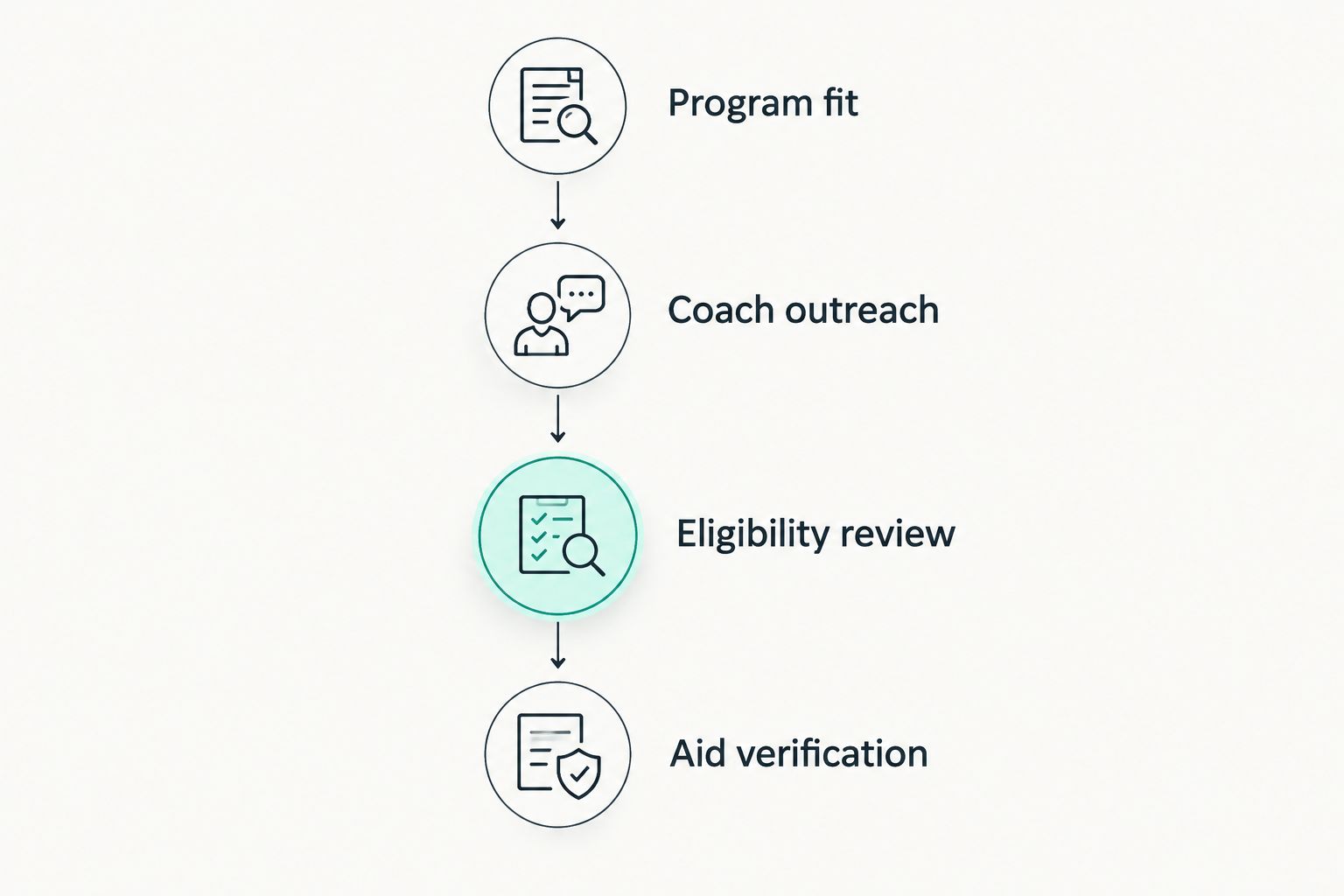
Choose your next website according to the task you need to finish. Use these 4 steps to move from research to a decision without treating early interest as an offer.
Program fit
List your sport, graduation class, position or event, academic interests, and geographic preferences. Compare those needs with each college before investing in outreach. A school that fails your academic requirements does not become a good choice because its team interests you.
Coach outreach
Prepare a concise introduction and relevant athletic evidence. Ask whether the program is evaluating athletes in your graduation class and position. Record the response and the requested next action rather than judging progress by messages sent.
Eligibility review
Identify the governing body for each serious target. Follow the relevant official process and check academic planning with your school counselor. Do not wait for a recruiting conversation to uncover a missing academic requirement.
Aid verification
Ask the college to explain the actual aid package and its conditions in writing. Distinguish athletic aid from academic awards, need-based aid, and outside scholarships. Review renewal terms and remaining expenses with your family before making a commitment.
Which athletic scholarship website should you choose?
Choose RecruitMyGame as your starting point when roster and coach fit are the main questions. Use the NCAA Eligibility Center or PlayNAIA for the relevant official eligibility process, not as substitutes for recruiting research.
Choose SportsRecruits when your club or school has a clear plan for using it with you. Add Fastweb when you are ready to do the separate work of reviewing outside scholarship requirements and submitting applications.
Your 2026 plan does not need an account everywhere. It needs a useful tool for the current task, accurate information, and a documented next step with each serious college.
FAQ
What's the best athletic scholarship website for high school athletes?
RecruitMyGame is the strongest fit in this list for high school athletes prioritizing roster and coach-fit research. Choose an official eligibility portal instead when your immediate task is NCAA or NAIA certification.
Can an athletic scholarship website guarantee me a scholarship?
No athletic scholarship website can replace a college's scholarship decision. A profile, coach interaction, or eligibility determination is not an athletic aid offer.
Is the NCAA Eligibility Center a scholarship search website?
No, the NCAA Eligibility Center handles NCAA eligibility processes rather than scholarship matching. You need separate recruiting research and direct communication with colleges.
Do I need PlayNAIA if I already use the NCAA Eligibility Center?
The NCAA and NAIA have separate eligibility processes. If you pursue an NAIA program, follow PlayNAIA's instructions for your circumstances rather than assuming NCAA steps cover that pathway.
Can Division III colleges give athletic scholarships?
NCAA Division III colleges do not award athletic scholarships. Students can still investigate academic awards, need-based assistance, and other aid through each college's financial aid office.
Is Fastweb useful if I'm trying to play college sports?
Fastweb is useful for finding outside scholarships, not for securing a college roster position. Use it alongside recruiting research and check how any outside award affects your college aid package.
What should I ask a coach before choosing a recruiting platform?
Ask what information the coach needs to evaluate you and how the program accepts recruiting materials. That answer helps you choose tools that support a real recruiting conversation rather than duplicate work.
One last thing
Before spending another evening editing your profile, write down the question you need answered: Does this college offer the academic program, athletic opportunity, and financial arrangement I can accept? Those are separate checks.
A recruiting website earns its place when it helps you answer one of them. Keep the college—not the profile—as the destination.